
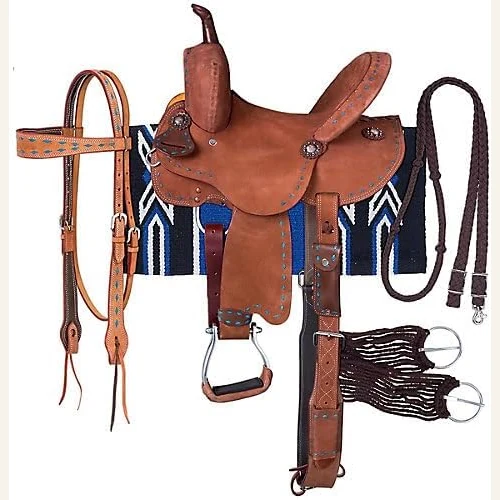
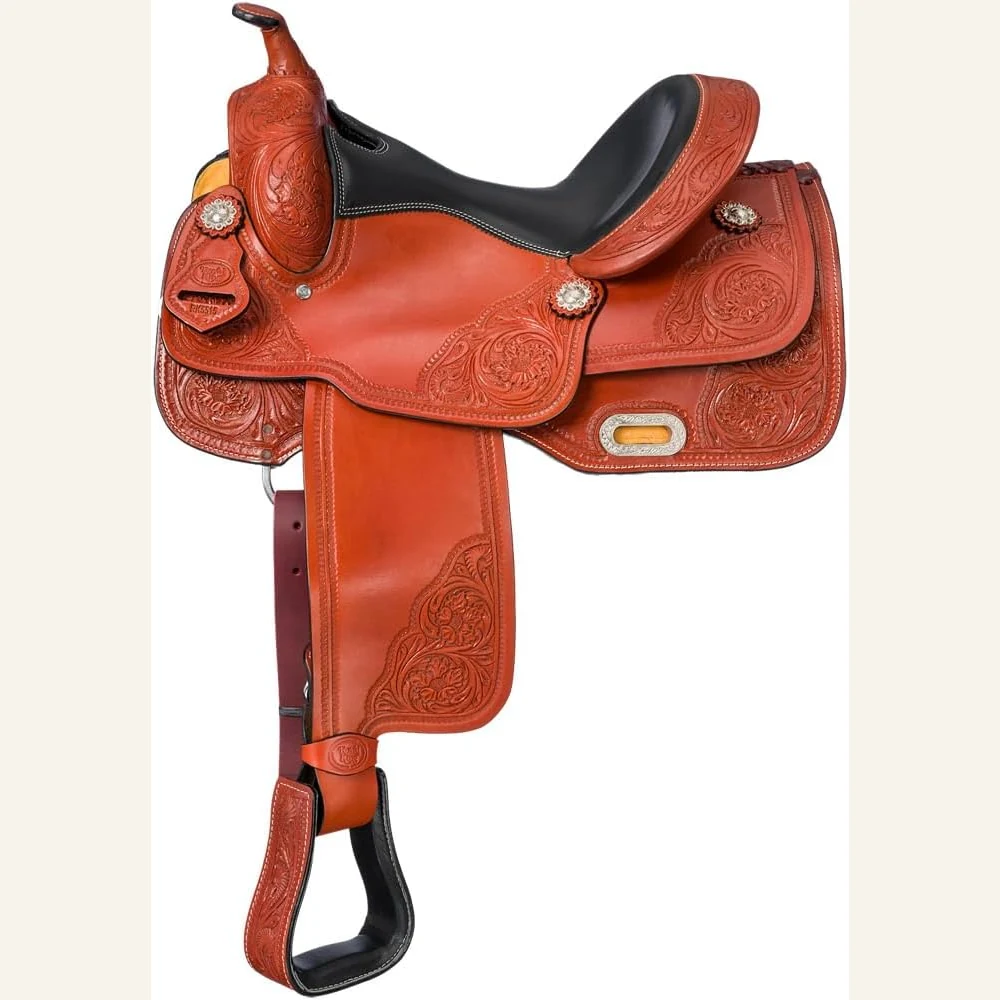
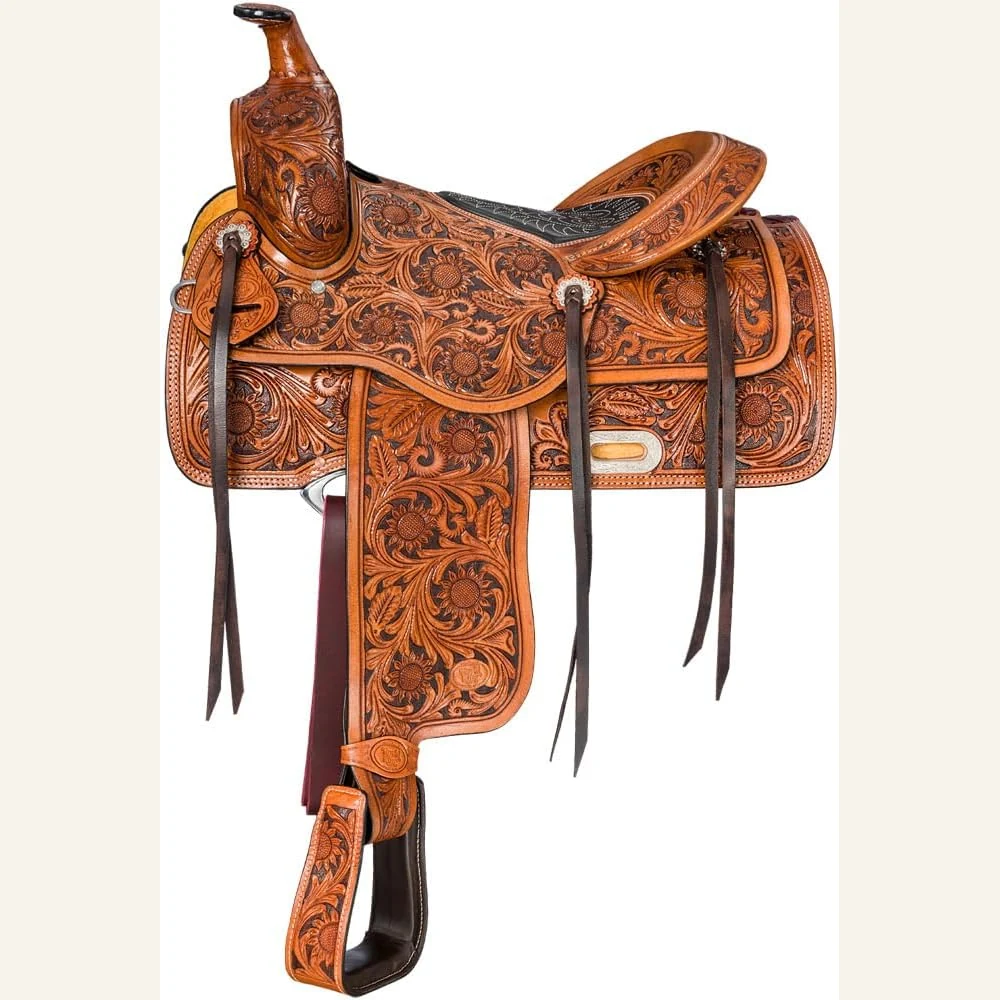
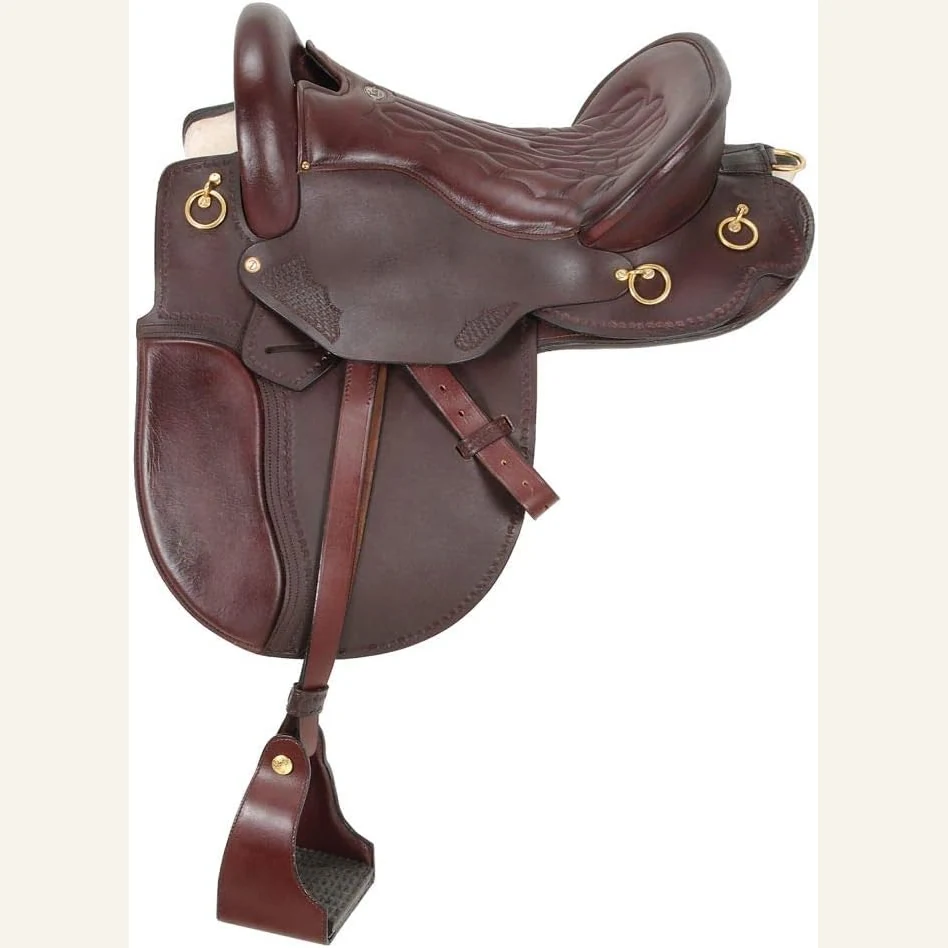
Royal King is not a single artisan shop with a storefront on Main Street. It is a brand name attached to a line of affordable Western and endurance saddles produced for the budget tack market and distributed through retailers, catalog suppliers, and online marketplaces across the United States.
Not a premium maker
If you are comparing Royal King to hand-tooled leather houses that build one saddle at a time, the comparison breaks immediately. Royal King occupies the entry-level tier — volume production, standardized sizing, and price points that let a 4-H family outfit a rider without financing. That positioning is deliberate, not accidental.
Manufacturing approach
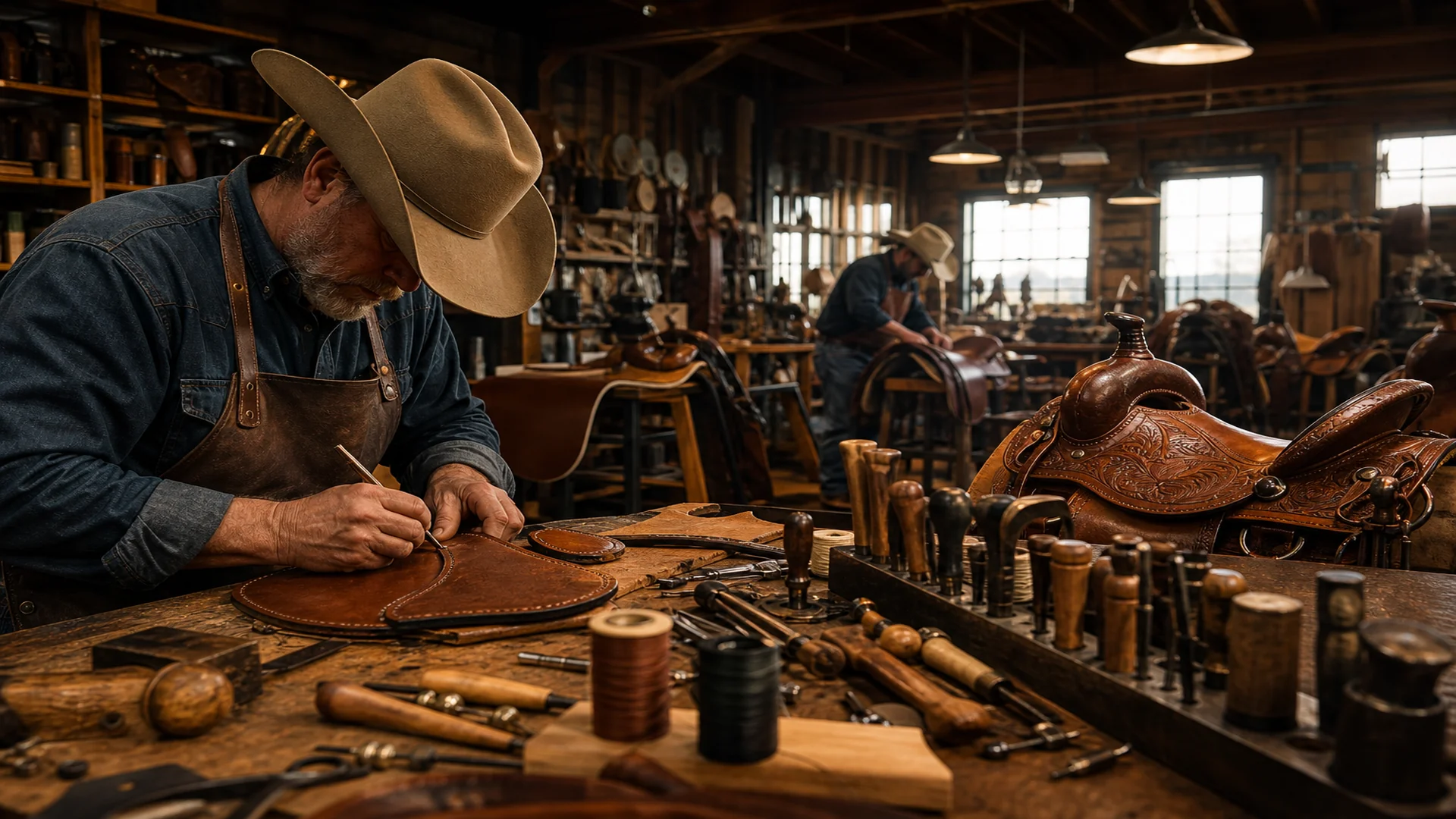
Production happens at facilities set up for quantity rather than bespoke craft. Skilled workers cut, stitch, and assemble saddles on production lines. Quality control focuses on consistency across SKUs — seat sizing, rigging placement, and hardware attachment — rather than individual artistic variation on each piece.
Many Royal King models use rawhide-wrapped fiberglass trees. Fiberglass keeps weight down compared with rigid wood trees on premium saddles. Rawhide wrapping adds traditional appearance and some structural integrity. The result is a lighter, more flexible ride that suits recreational use but lacks the decades-long reputation of ranch-grade wood trees.
Materials and leather
Leather on Royal King saddles is typically a mix of genuine leather panels and synthetic or bonded components on less visible areas. Tooling patterns are stamped rather than hand-carved. Silver on show models is decorative plate work, not the heavy engraving you see on trophy saddles costing several times more.
Synthetic leather sections wear faster than full-grain hides on premium brands. Stitching density is adequate for light trail riding but may show fatigue under daily ranch workloads. Understanding these material choices explains both the price and the community warnings from experienced trainers.
How they reach stores
Royal King distributes through wholesale tack channels. Regional retailers stock barrel, trail, and youth models based on local demand. Online listings often highlight complete package deals — saddle plus headstall, reins, girth, and blanket — because bundling is a core part of the brand value proposition.
You will not typically buy directly from a Royal King factory showroom. Purchase paths run through tack shops, farm supply stores, and e-commerce sellers who specialize in Western gear. That indirect model keeps overhead low and prices competitive.
Who benefits most
Beginners testing Western riding, youth riders outgrowing ponies, casual trail riders logging a few hours monthly, and lesson barns needing loaner tack all fit the Royal King profile. Riders who already know they want a decades-long ranch workhorse should budget for a premium maker instead.
Brand versus maker confusion
Search results sometimes mix Royal King with similarly named tack lines. Verify model numbers and tree descriptions on the actual listing before you buy. This site is an independent guide — we do not speak for the manufacturer and we update pages when catalog changes surface in retailer feeds.
Quality expectations
Expect fair finish quality for the price tier, functional rigging on arrival, and acceptable comfort for recreational seat times. Do not expect heirloom durability, custom tree fitting, or leather that deepens into a twenty-year patina the way a $3,000 ranch saddle might.
Warranty and support
Support paths run through the retailer who sold the saddle, not a single Royal King service desk. Keep your receipt, photograph any shipping damage within 48 hours, and document fit issues with dated photos on the horse. Retailers familiar with budget tack usually handle exchanges faster when you bring the saddle clean and dry.
Environmental factors
Humid coastal barns accelerate hardware tarnish and can stiffen synthetic panels if saddles sit uncovered. Dry desert climates crack leather faster when conditioners are skipped. Storage on proper racks — never horn-down on concrete — extends usable life regardless of brand tier. A $15 rack can prevent a $300 replacement mistake.
Labeling and SKUs
Model numbers change when retailers refresh catalog seasons. Compare seat size, tree width, and rigging style rather than memorizing SKU strings alone. A knowledgeable tack retailer can identify equivalent replacements when a colorway disappears from the website.
Related reading
Compare owner sentiment on our reviews page, or learn inspection steps for pre-owned tack on the used saddles guide. Return to the homepage for the full model overview.
Author: Sarah Mitchell — equestrian gear researcher focused on entry-level Western tack.